
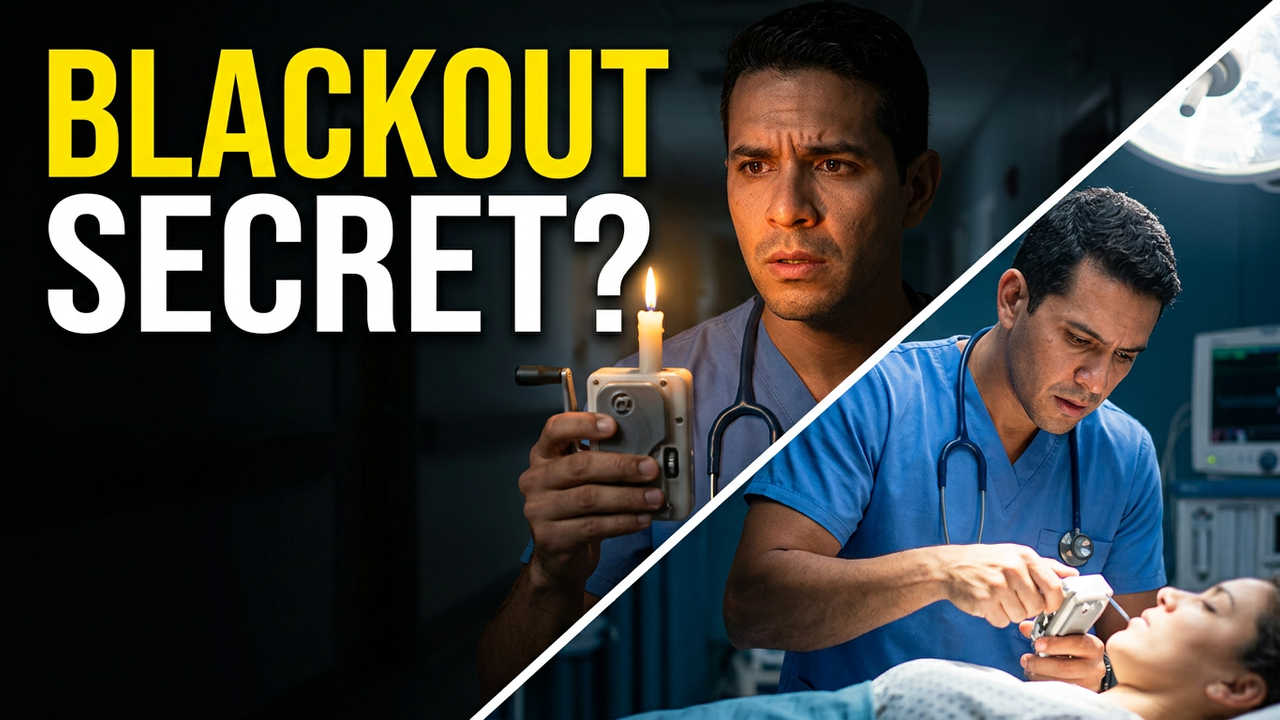
The Venezuelan Hospital Secret That Saves Lives in a Blackout
When the electricity goes out, hospitals can’t simply stop caring for patients. What happened in Venezuela reveals important lessons every family should know before the next emergency.

Imagine this.
You’re sitting at home one evening when suddenly everything goes dark.
The lights disappear.
Your refrigerator stops humming.
Your phone has 18% battery left.
And nobody knows when the electricity is coming back.
Now imagine being inside a hospital when that happens.
Patients are connected to medical equipment. Some need oxygen support. Others are receiving treatments that cannot simply be postponed.
And the medical staff suddenly have to figure out how to keep essential services running.
That isn’t just a hypothetical scenario. Hospitals in Venezuela faced serious electricity disruptions during the country’s 2019 blackout crisis.
But what can the rest of us learn from what happened?
1. What Really Happened Inside Venezuelan Hospitals?
In March 2019, a widespread power outage affected much of Venezuela.
Hospitals struggled to continue operating amid unreliable electricity, limited supplies, and shortages of backup power.
Journalists documented medical teams using flashlights and conserving generator electricity for critical care.
Some facilities could keep only selected departments powered.
Patients and medical workers faced frightening uncertainty.
According to reporting from the time, certain hospital services were disrupted, and staff had to make difficult decisions about how to allocate limited resources.
Read ABC News’ reporting on Venezuela’s hospital blackouts.

Hospitals need reliable backup systems, emergency plans, trained personnel, and adequate supplies. There is no verified single secret medical treatment that guarantees survival during a blackout.
2. Why Backup Power Can Mean the Difference Between Safety and Disaster
Think about how many things in a hospital depend on electricity.
Medical monitors.
Some breathing-support devices.
Lighting.
Medication refrigeration.
Communication systems.
Without dependable backup systems, essential care can be disrupted.
That’s why emergency generators, battery backups, and carefully designed contingency plans matter.
And while your home isn’t a hospital, some of the same preparedness principles apply.
Backup Electricity
Identify safe power options for communication devices and medically necessary equipment.
Medication Planning
Know which prescriptions need refrigeration and how to protect them during an outage.
Emergency Contacts
Keep important phone numbers and medical information accessible offline.
Water and Supplies
Maintain a practical supply of safe water, food, lighting, and basic necessities.
3. What If Someone in Your Family Depends on Medical Equipment?
This is one of the most important reasons to prepare before the electricity goes out.
Some people depend on powered medical equipment at home.
Examples include oxygen concentrators, certain ventilators, home dialysis equipment, and other devices.
If anyone in your household uses this equipment, ask their healthcare team and equipment supplier:
- How long the equipment operates without power.
- Whether approved backup batteries are available.
- Which backup power sources are safe to use.
- When relocation to a powered medical facility is necessary.
- What to do if the device stops working.

If someone depends on life-sustaining medical equipment and backup power is failing, follow their emergency care plan and seek emergency assistance. Never improvise electrical connections or medical procedures.
4. The Medication Problem Most People Forget
When the power goes out, people usually worry about the food in their refrigerator.
But what about the medication?
Some prescriptions require refrigeration or controlled temperatures.
Insulin and certain other medications can be affected by improper storage.
Before an emergency, ask your pharmacist:
- Which medications need refrigeration.
- How long each medicine can remain at room temperature.
- Whether cold packs or insulated containers are appropriate.
- How to avoid accidentally freezing medication.
- How to obtain emergency prescription refills.
Different medications have different storage requirements.
Never assume that every refrigerated medicine follows the same rules.

Read the FDA’s medication safety guidance for natural disasters.
5. What Every Family Should Have Before a Blackout
You don’t need to turn your home into a survival bunker.
But you should have enough basic supplies to manage a temporary disruption safely.
Home Blackout Emergency Checklist
- Flashlights: Plus extra batteries.
- Power banks: Keep them charged.
- Battery-powered radio: For emergency updates.
- Drinking water: Store an appropriate emergency supply.
- Nonperishable food: Choose items that don’t require cooking.
- First-aid supplies: For basic injuries.
- Medication list: Include doses, allergies, and pharmacy information.
- Backup medical power: When needed for prescribed equipment.
- Emergency contact numbers: Keep a printed copy.
- Carbon monoxide detectors: With battery backup.

6. A Dangerous Mistake People Make With Generators
Portable generators can help during an outage.
But they can also be deadly if used incorrectly.
Fuel-powered generators produce carbon monoxide, an invisible, odorless gas.
Never operate a fuel-powered generator inside your home, garage, basement, or enclosed porch.
Keep generators outdoors, at least 20 feet from windows, doors, and vents, with the exhaust directed away from the building.
Use working carbon monoxide detectors with battery backup.
And never connect a generator directly to home wiring without properly installed transfer equipment and qualified professional guidance.
Learn more from the CDC’s emergency power guidance.
7. Can Natural Remedies Help During an Emergency?
When pharmacies, hospitals, or transportation become difficult to access, people often become interested in survival medicine and traditional home remedies.
It’s understandable to want practical information available even when the internet is down.
But here’s where caution matters.
Not every home remedy is safe.
Some herbs interact with medications.
Some injuries require professional treatment.
And delaying emergency care can make serious conditions worse.
A reliable preparedness plan should include recognized first-aid training, prescribed medication planning, and clear instructions for seeking professional medical assistance.
A survival guide may offer educational information, but it should never be treated as a replacement for medical care.
8. Watch: The Venezuelan Hospital Blackout Story
The following video explores a survival-medicine perspective related to the Venezuelan hospital blackout story.
Watch it carefully and compare medical claims with established safety recommendations.
Explore the Survival Medicine Book →
Affiliate disclosure: This link leads to a promotional offer. We may earn a commission from qualifying purchases at no additional cost to you.
9. Five Things to Do Before the Next Power Outage
1. Make a family emergency plan.
Identify important contacts, meeting locations, and essential medical needs.
2. Charge backup power sources.
Keep power banks ready and arrange approved backup support for medical devices.
3. Prepare food and water.
Maintain supplies that can be used safely without electricity.
4. Protect medications.
Ask your pharmacist how to handle temperature-sensitive prescriptions during outages.
5. Learn basic first aid.
Consider training from a recognized organization such as the American Red Cross.
10. Frequently Asked Questions
What happened in Venezuelan hospitals during the 2019 blackout?
Hospitals experienced serious power disruptions, equipment limitations, and interruptions to some services. Medical workers struggled to continue essential care.
What was the Venezuelan hospital secret?
There is no verified single secret technique. The documented lessons involve backup power, emergency planning, medical personnel, and limited-resource decision-making.
How do I protect refrigerated medicine during an outage?
Follow medication-specific instructions and contact your pharmacist or manufacturer. Safe storage times differ among medicines.
Can a survival medicine book replace professional medical care?
No. Books can support education and planning, but they cannot replace professional diagnosis, emergency treatment, or prescribed medications.
The Bottom Line: Preparation Is What Saves Time When Everything Goes Dark
The Venezuelan blackouts demonstrated how vulnerable essential medical services can become when electricity fails.
Hospitals struggled to operate.
Families faced uncertainty.
And healthcare workers had to continue caring for patients under difficult conditions.
But the lesson isn’t that everyone needs to live in fear.
It’s that preparation matters.
Because when an emergency happens, having a plan can make a meaningful difference.
Don’t wait until the lights go out to decide what your family needs.
Beauty Never Fades.
Want to Learn More About Survival Medicine?
Explore the book presentation and evaluate its information alongside recognized first-aid and emergency preparedness guidance.
View the Survival Medicine Book →Affiliate link. We may earn a commission from qualifying purchases. No book or product guarantees safety during an emergency.
Sources & Further Reading
- ABC News: Venezuelan Hospitals During the 2019 Blackout
- CDC: Emergency Power Sources
- FDA: Medical Devices and Natural Disasters
- FDA: Safe Drug Use After Natural Disasters
Medical disclaimer: This article is for educational purposes and does not replace emergency services, professional medical treatment, or instructions from medical equipment manufacturers.