
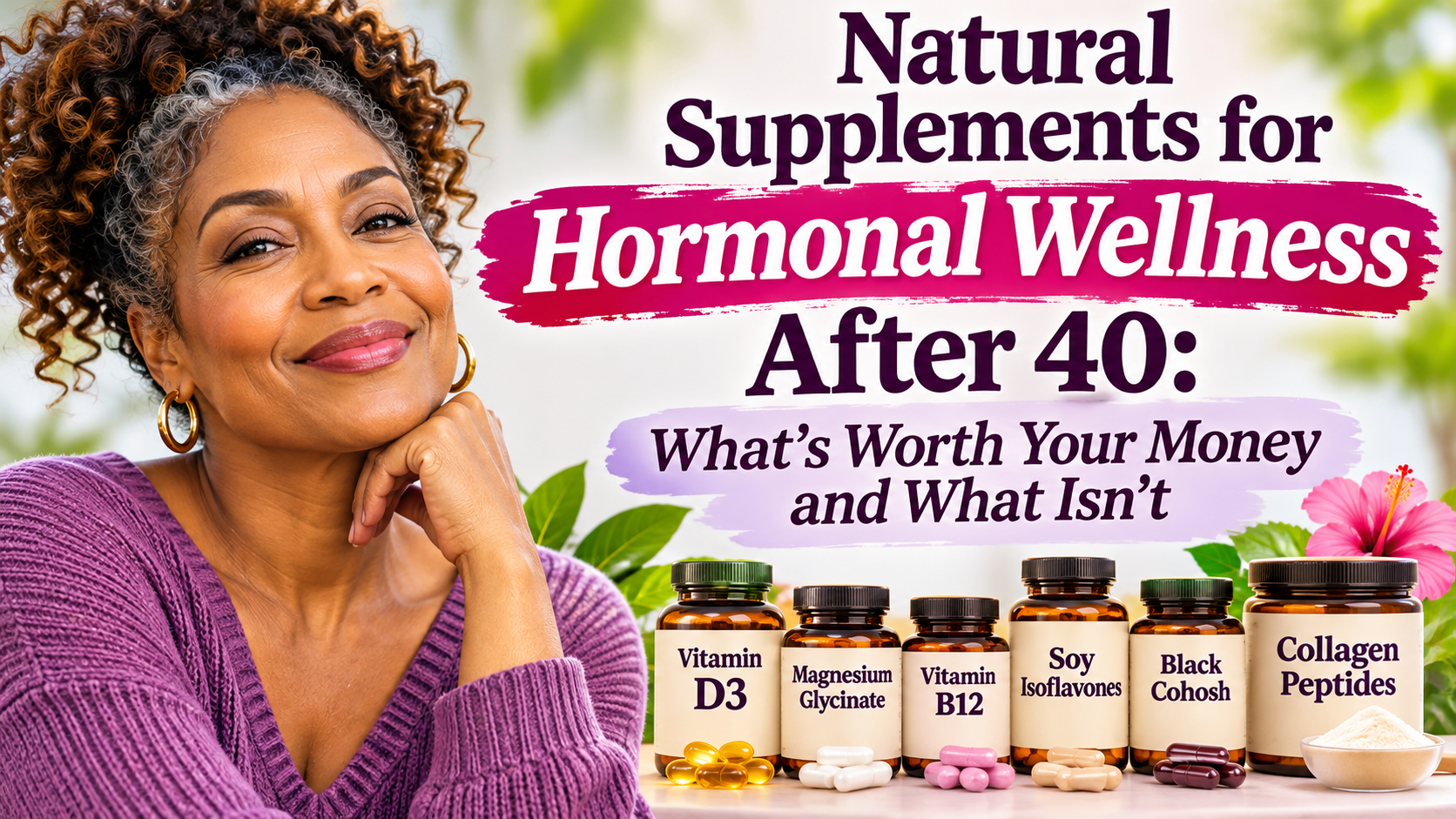
Hot flashes. Restless nights. Mood changes. Stubborn weight. Skin that suddenly feels different.
When your body starts changing, it’s tempting to buy every supplement promising to balance your hormones.
But which ones are actually worth your money?
If you’re over 40, you’ve probably noticed something.
Your body doesn’t always respond the way it used to.
Maybe you’re sleeping differently. Maybe your skin has changed. Maybe you’re dealing with hot flashes, fatigue, or hair thinning.
And suddenly, every advertisement seems to have a miracle supplement waiting for you.
One promises to balance estrogen.
Another claims to lower cortisol.
And another says it can fix everything from belly fat to brain fog.
But here’s the truth:
Some supplements can help correct nutritional deficiencies or support specific health needs. Many products marketed for hormonal balance have little convincing evidence behind them.
Let’s separate what’s useful from what’s mostly marketing.
As an Amazon Associate I earn from qualifying purchases. This article contains affiliate links. If you purchase through these links, Beauty Never Fades may earn a commission at no additional cost to you. Our recommendations are based on the evidence discussed, not a guarantee of results.
1. Why Your Body Suddenly Feels Like It’s Running on a Different Operating System
During perimenopause, estrogen and progesterone levels fluctuate as the body approaches menopause.
These changes can affect temperature regulation, menstrual cycles, sleep, and vaginal health.
At the same time, aging, stress, medications, nutrition, and other health conditions can influence how you feel.
That’s why one woman may experience frequent hot flashes while another notices sleep problems or changes in her skin.
Not every symptom after 40 is caused by menopause, either.
Fatigue may be associated with anemia, thyroid problems, sleep disorders, or other conditions.
Hair loss may have several possible causes.
And unexpected weight changes aren’t proof of a hormonal imbalance.
The first step is identifying what’s happening instead of assuming you need another supplement.
For more information about skin changes during this stage of life, read our guide to perimenopause, menopause, and skin health .
2. What a Supplement Can (and Can’t) Do for Hormones
Let’s clear up one of the biggest misconceptions in the wellness industry.
Most vitamins and herbal supplements do not directly restore estrogen or progesterone to youthful levels.
A vitamin D supplement can help someone meet their vitamin D needs.
Vitamin B12 can help correct a B12 deficiency.
But neither should be advertised as a treatment that reverses menopause.
Some herbal products have been studied for hot flashes and other symptoms, but results are often inconsistent.
Supplements may also interact with medications or cause unwanted effects.
Ask yourself what specific problem you’re trying to address. A supplement intended to correct a nutritional deficiency is different from a product claiming to balance all your hormones.
3. Magnesium, Vitamin D, and Omega-3: The Unglamorous Basics Worth Checking First
Before spending money on expensive hormone blends, look at your basic nutritional needs.
These nutrients are important for health, but they aren’t universal treatments for menopause symptoms.
Vitamin D3: Nature Made Vitamin D3
Best for: Women with inadequate vitamin D intake, deficiency, or certain bone-health concerns.
Vitamin D helps the body absorb calcium and supports normal bone health.
Bone health deserves attention after menopause because declining estrogen is associated with increased bone loss.
But vitamin D isn’t a proven treatment for hot flashes, mood swings, or hormone balancing.
Our verdict: Worth considering if your diet, health history, or testing indicates a need. Don’t automatically assume more is better.
Check Nature Made Vitamin D3 on AmazonAffiliate link. Confirm the product, strength, and serving size before purchasing.
Magnesium Glycinate: Nature Made
Best for: Women who may not get enough magnesium from food.
Magnesium is involved in normal muscle, nerve, and metabolic function.
Magnesium glycinate is a commonly marketed form of supplemental magnesium.
However, research does not establish magnesium supplements as a reliable treatment for menopause-related insomnia or hot flashes.
Our verdict: Reasonable to consider for inadequate intake, but don’t purchase it expecting guaranteed sleep improvement.
Check Magnesium Glycinate on AmazonAffiliate link. Magnesium supplements may interact with certain medicines and require special caution in kidney disease.
What About Omega-3?
Omega-3 fatty acids are found in foods such as salmon, sardines, walnuts, and flaxseed.
They play important roles in health, and certain omega-3 products have specific medical uses.
But fish oil supplements haven’t been consistently shown to relieve hot flashes or restore hormonal balance.
Before buying another bottle, consider whether you can meet your needs through food.
If you take blood-thinning medication or have other medical concerns, discuss high-dose omega-3 supplements with your healthcare professional.
4. Herbal Options Women Ask About Most
Now let’s talk about the supplements that receive some of the biggest marketing promises.
Black cohosh, soy isoflavones, ashwagandha, maca, and evening primrose oil frequently appear in menopause supplement advertisements.
But natural doesn’t automatically mean effective or risk-free.

Black Cohosh: Remifemin Menopause Relief
Best for: Readers researching herbal approaches to hot flashes.
Black cohosh is one of the better-known herbs studied for menopausal symptoms.
Some studies of standardized extracts have reported improvements in hot flashes, while others have not.
Remifemin is one of the black cohosh preparations that has been studied.
Even so, the evidence isn’t strong enough to promise relief for everyone.
Rare cases of serious liver injury have been reported among people taking commercial black cohosh products, although a direct cause hasn’t always been established.
Our verdict: An option to discuss with a healthcare professional, not a first-line treatment or automatic recommendation.
View Remifemin on AmazonAffiliate link. Avoid self-treatment with black cohosh if you have liver disease, and discuss medication interactions and your health history before use.
Soy Isoflavones: NOW Foods
Best for: Women researching plant-based approaches to hot flashes.
Soy isoflavones are plant compounds called phytoestrogens.
Some research suggests they may slightly reduce the frequency or severity of hot flashes.
Other studies have found limited or inconsistent benefits.
Eating soy foods is not the same as taking concentrated soy-isoflavone supplements.
Our verdict: Possibly worth discussing for mild symptoms, but the expected benefit may be small.
View Soy Isoflavones on AmazonAffiliate link. Women with a history of estrogen-sensitive cancer or related concerns should discuss concentrated supplements with their healthcare team.
Ashwagandha: Popular, but Not a Proven Menopause Fix
Ashwagandha is often promoted for stress and sleep.
Some small studies suggest benefits for perceived stress, but evidence for treating menopausal symptoms is limited.
There are also safety concerns, including reported liver injury, possible effects on thyroid function, and interactions with medications.
Our verdict: Don’t buy it solely because a label promises to balance cortisol and estrogen.
Maca: Big Claims, Limited Proof
Maca is frequently marketed for libido, energy, and hormonal wellness.
However, clinical evidence for menopause symptom relief remains limited.
Our verdict: Not a priority purchase if your budget is tight.
Evening Primrose Oil: Probably Not Worth Buying for Hot Flashes
Evening primrose oil has been promoted for many women’s health concerns.
But research hasn’t demonstrated convincing benefits for menopause-related hot flashes.
Our verdict: Skip it if hot-flash relief is your main goal.
5. Supplements for the Skin and Hair Side of Hormonal Change
Hormonal changes can affect skin texture, moisture, and hair growth.
But not every skin or hair change is caused by hormones.
Nutrition, genetics, scalp conditions, stress, and other health issues can also contribute.
Vitamin B12: Nature Made Vitamin B12
Best for: Women with B12 deficiency or risk factors for inadequate B12.
Vitamin B12 supports normal red blood cell formation and nervous system function.
Some people may be at greater risk of deficiency, including those who avoid animal products or take certain medications.
But taking additional B12 does not reliably increase energy when B12 levels are already adequate.
Our verdict: Worth considering for a documented or likely nutritional need, not as a universal beauty or hormone supplement.
Check Vitamin B12 on AmazonAffiliate link.
Collagen Peptides: Nature Made
Best for: Readers interested in the research on skin hydration and elasticity.
Collagen is a structural protein found in skin and other tissues.
Some studies suggest oral collagen peptides may modestly improve certain skin measurements, but research quality varies and some studies have industry involvement.
Collagen supplements are not proven to restore estrogen, reverse menopause, or regrow hair.
Our verdict: Optional if your budget allows, but not essential for hormonal wellness.
View Collagen Peptides on AmazonAffiliate link. Check the ingredient source if you have food allergies or dietary restrictions.
For more information about midlife skin concerns, read:
- Why Your Skin Broke Out at 45
- Natural Ways to Boost Skin Elasticity After 40
- Acne Treatment for Hormonal Breakouts
- Hair Loss Remedies for Women
6. How to Read a Label So You Don’t Waste Money on Fairy Dust
Supplement companies know how to make a bottle look convincing.
Pretty packaging. Scientific-sounding ingredients. Promises about hormones, metabolism, and energy.
But before you spend your money, turn the bottle around.
Six Things to Check Before Buying
- Ingredient amounts: Does the Supplement Facts panel tell you how much of each active ingredient you’re getting?
- Serving size: Is the advertised dose one capsule or several capsules per day?
- Proprietary blends: Are individual ingredient amounts hidden inside a combined blend?
- Independent testing: Look for credible verification programs such as USP or NSF where applicable. Verify the actual certification.
- Safety warnings: Check for interactions, allergies, and restrictions.
- Price per serving: A cheaper bottle isn’t always cheaper when the recommended serving requires multiple capsules.
And remember: a supplement being sold online does not mean the FDA has approved it for safety and effectiveness before marketing.
Our Supplement Value Comparison
| Supplement | Potential Value | Our Verdict |
|---|---|---|
| Vitamin D3 | Supports bone health and corrects inadequate intake | Consider when needed |
| Magnesium | Supports normal muscle and nerve function | Consider when intake is low |
| Vitamin B12 | Important for red blood cells and nerve function | Useful for deficiency |
| Soy Isoflavones | Possible small hot-flash benefit | Mixed evidence |
| Black Cohosh | Possible benefit from certain extracts | Discuss safety first |
| Collagen | Possible modest skin benefits | Optional |
| Maca / Evening Primrose | Insufficient convincing menopause evidence | Low priority |
7. Who Should Skip a Supplement or Call Their Doctor First?
Some readers should be especially careful before starting a new supplement.
- Women taking prescription medications, especially blood thinners or thyroid medications.
- Women with liver or kidney disease.
- Women with a history of hormone-sensitive cancer.
- Women preparing for surgery.
- Women who are pregnant, breastfeeding, or could become pregnant.
- Women taking several supplements that may contain overlapping ingredients.
Also, don’t assume persistent symptoms are normal simply because you’re over 40.
Heavy or unusual bleeding, bleeding after menopause, severe fatigue, rapidly progressing hair loss, or major changes in your health deserve professional evaluation.
Ask: “What is causing my symptoms, and which treatments have good evidence for that specific problem?”
8. Building a Simple, Affordable Starter Routine You’ll Actually Stick With
You don’t need a cabinet full of supplements.
And you definitely don’t need to spend hundreds of dollars every month chasing the latest wellness trend.
Start with a few practical steps.
Track sleep, hot flashes, mood, skin changes, or other concerns so you can discuss patterns with your healthcare professional.
Look at your usual intake of protein, calcium-rich foods, vitamin D sources, and other nutrients before buying supplements.
Ask whether your symptoms or risk factors justify testing for conditions such as anemia, thyroid disease, or vitamin deficiencies.
If supplementation is appropriate, choose a product with clear labeling and a suitable dose rather than stacking multiple hormone blends.
Build consistent sleep habits and include movement appropriate for your abilities and health needs.
Discuss ongoing symptoms, possible side effects, and whether a supplement is still necessary. Don’t continue paying for products that aren’t addressing a real need.

What If Your Menopause Symptoms Are Really Affecting Your Life?
If hot flashes, night sweats, or sleep problems are interfering with your daily life, don’t feel obligated to keep trying supplements.
Effective evidence-based treatments are available.
Depending on your medical history and preferences, these may include menopausal hormone therapy or certain nonhormonal prescription treatments.
A healthcare professional can help you understand the benefits and risks.
The Bottom Line: Spend Your Money on What Your Body Actually Needs
Getting older doesn’t mean you need to start swallowing a handful of supplements every morning.
And feeling different after 40 doesn’t automatically mean your hormones are broken.
Some supplements are useful for correcting nutritional deficiencies.
Some herbal products may offer modest relief for certain symptoms.
Others have more marketing behind them than meaningful evidence.
The smartest approach is to identify your needs, understand the research, and avoid paying for promises that sound too good to be true.
Because taking care of yourself should make your life better, not empty your wallet.
Explore the Supplement Options Discussed Above
Review the ingredient labels, serving sizes, and safety information before choosing any supplement. Our product links are included throughout this article so you can compare options without guessing.
Start With Vitamin D3Paid affiliate link. Buy only if the product fits your nutritional needs.
Sources and Further Reading
- NIH NCCIH: Menopausal Symptoms and Complementary Health Approaches
- NIH NCCIH: Research on Soy and Black Cohosh
- NIH Office of Dietary Supplements: Vitamin D
- NIH Office of Dietary Supplements: Magnesium
- NIH Office of Dietary Supplements: Vitamin B12
- FDA: Questions and Answers on Dietary Supplements
Medical disclaimer: This article is for educational purposes only and is not a substitute for professional medical advice, diagnosis, or treatment. Supplements may cause side effects or interact with medications. Consult a qualified healthcare professional before starting new supplements, particularly if you have an underlying medical condition.