
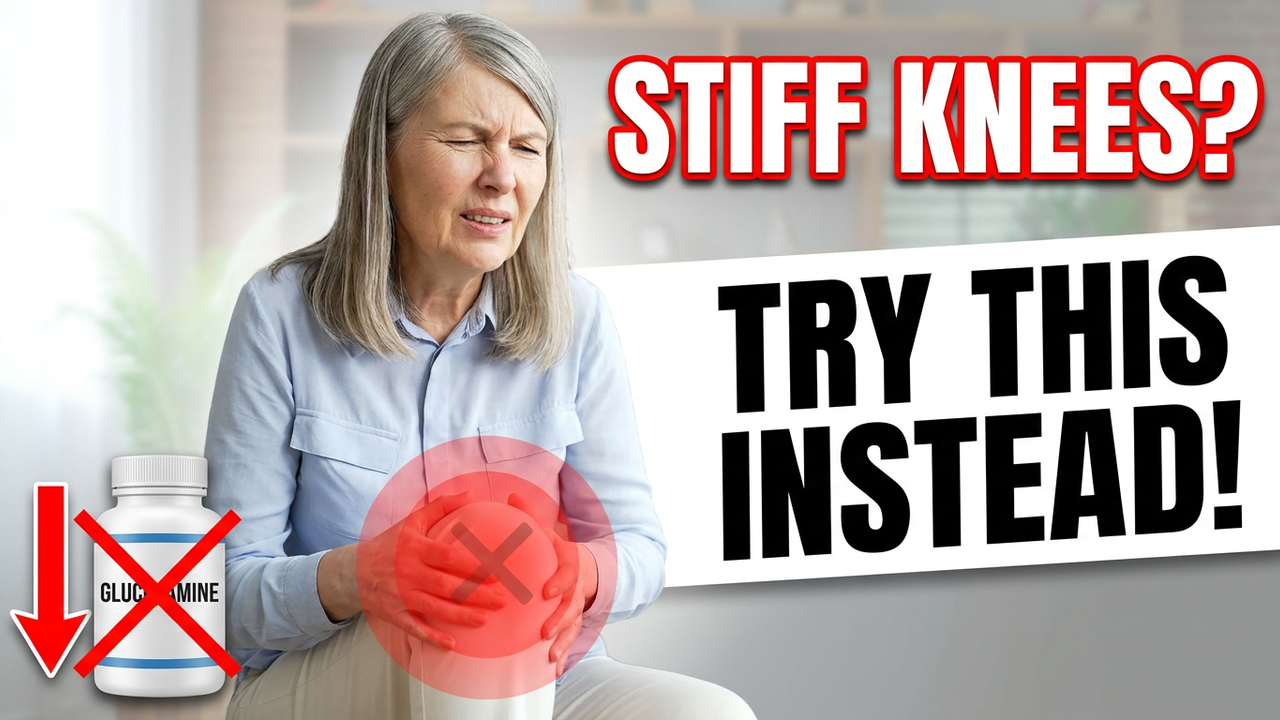
Stiff Knees & Joints After 40? Why Glucosamine Fails (Do THIS Instead)
Do your knees feel stiff when you get out of bed? Does standing up after sitting for a while feel harder than it used to? Let’s talk about what might be happening—and what actually helps.
Remember when you could jump out of bed, run errands all day, and never give your knees a second thought?
Now?
You sit on the couch for a little too long, stand up, and suddenly your knees have something to say about it.
Maybe it’s a little stiffness in the morning.
Maybe your hips feel tight after driving.
Or perhaps your fingers, knees, and ankles just don’t move as comfortably as they once did.
And if you’ve already tried glucosamine supplements without noticing much difference, you’re probably wondering:
“Why am I spending money on something that doesn’t seem to work?”
Let’s look at what’s really happening inside your joints, why some popular supplements disappoint, and which habits have stronger evidence behind them.
1. Why Do Your Joints Start Feeling Stiff After 40?
Joint stiffness can happen for several reasons.
As we age, the tissues that support our joints change. Previous injuries, reduced muscle strength, and conditions such as osteoarthritis may contribute to discomfort.
But not every stiff knee is arthritis.
Sometimes stiffness is related to prolonged sitting, overuse, or a change in activity.
Other times, persistent swelling or morning stiffness may point to a condition that needs medical attention.
Osteoarthritis
Changes in cartilage and other joint tissues can cause pain, stiffness, and reduced mobility.
Muscle Weakness
Weaker muscles around the knees and hips may make everyday movement more difficult.
Past Injuries
Previous joint injuries can increase the risk of developing problems later in life.
Inflammatory Conditions
Some types of arthritis cause swelling and prolonged stiffness that require specific treatment.
Seek prompt medical attention for a hot, very swollen joint, fever with joint pain, sudden severe pain, or inability to bear weight. Persistent swelling or prolonged morning stiffness also deserves evaluation.
2. Why Glucosamine Doesn’t Work for Everyone
Glucosamine has been marketed for years as a way to support cartilage and joint health.
And on the surface, the idea sounds reasonable.
Glucosamine is involved in the structure of cartilage, so taking more of it might seem like an obvious way to support your joints.
But the human body doesn’t always work that simply.
Just because a substance is part of cartilage doesn’t mean taking it as a supplement will rebuild worn cartilage.
Researchers have studied glucosamine for knee osteoarthritis, and the findings have been inconsistent.
Some studies have reported modest improvements, while others have found little meaningful benefit compared with placebo.
Major clinical guidelines have therefore questioned or discouraged its routine use for osteoarthritis.
The bottom line? Glucosamine isn’t a reliable solution for everyone, and it hasn’t been proven to regenerate damaged cartilage.
That doesn’t mean every person who takes it will have the same experience. It means the evidence doesn’t justify treating it as a guaranteed fix.
3. The Biggest Mistake: Focusing Only on Supplements
Here’s something that often gets overlooked.
Your joints don’t work alone.
They depend on surrounding muscles, tendons, ligaments, balance, and overall physical conditioning.
If the muscles supporting your knees become weaker, even ordinary activities can start feeling more difficult.
That’s why taking a supplement while ignoring strength and mobility may leave you disappointed.
For many people with knee osteoarthritis, exercise is one of the most strongly recommended treatments.
And no, that doesn’t mean you need to start running marathons.
It means finding safe, manageable ways to keep moving.

4. Do THIS Instead: Strengthen the Muscles Supporting Your Knees
If your knees feel stiff, the idea of exercising might sound completely backward.
But appropriately selected exercise can help improve pain, strength, and physical function.
The trick is starting gently and choosing movements that fit your abilities.
Comfortable Walking
Start with a manageable distance or duration and gradually increase activity as tolerated.
Chair Sit-to-Stands
Practice standing from a stable chair with support if needed. This can help build leg strength.
Gentle Range of Motion
Move your knees and other joints comfortably through their available range without forcing painful positions.
Water Exercise
Pool-based activity can be a comfortable option when weight-bearing exercise is difficult.
If you’re unsure where to start, a physical therapist can help create a plan for your specific joint problems.
Exercise should be adjusted if it causes substantial or persistent pain, swelling, or worsening symptoms.
5. Your Weight Can Affect How Your Knees Feel
Let’s talk about something important without turning it into another conversation about crash dieting.
Your knees carry load every time you stand, walk, or climb stairs.
For people with knee osteoarthritis who are overweight, even modest weight loss may help reduce symptoms and improve function.
But weight isn’t the only factor in joint pain, and losing weight isn’t appropriate or necessary for everyone.
Regardless of your weight, building strength and maintaining movement can support joint health.
Small changes worth considering
- Choose regular, manageable physical activity.
- Build meals around vegetables, protein, and fiber-rich foods.
- Avoid extreme diets that leave you weak or exhausted.
- Focus on sustainable habits rather than rapid results.
6. What About Inflammation and Joint Pain?
You may have seen advertisements suggesting that every stiff joint is caused by inflammation.
That’s an oversimplification.
Osteoarthritis involves changes in several joint tissues, and inflammation can contribute to symptoms. But other causes of stiffness may need very different treatments.
For some people with knee osteoarthritis, topical anti-inflammatory medication may help manage pain.
Heat may also provide temporary comfort for stiffness, while cold packs may be useful after activity when swelling is present.
Medication choices should account for your medical history, other medications, and potential side effects.
Rather than trying to eliminate all inflammation with a supplement, work on identifying the cause of your symptoms and choosing treatments with evidence for that condition.
7. Watch: Exploring Another Approach to Joint Wellness
There’s growing interest in joint-health products and different approaches to supporting mobility as we get older.
I’ve included the video below for anyone curious about another perspective.
As with any promotional presentation, review the claims carefully. An ingredient being studied for joint health doesn’t mean a particular product has been proven to treat arthritis.
Interested in learning more about the approach featured in the presentation?
Explore the Joint Wellness Presentation →
Affiliate disclosure: This link leads to a promotional offer. We may earn a commission from qualifying purchases at no additional cost to you.
Review the ingredients, possible medication interactions, and evidence for the finished product. No dietary supplement has been established as a cure for osteoarthritis or a reliable way to rebuild damaged cartilage.
8. Your Seven-Day Joint Mobility Reset
You don’t have to transform your entire routine in one week.
Start by paying attention to what your joints can comfortably do and gradually build consistency.
Write down which joints hurt, when stiffness occurs, how long it lasts, and what makes it better or worse.
Try a short walk or comfortable range-of-motion exercises suited to your ability.
Try supported chair sit-to-stands or another beginner exercise recommended by a professional.
Stand, stretch gently, or walk briefly when you’ve been sitting for an extended time.
Choose comfortable, supportive shoes appropriate for your activities.
Consider gentle stretching, beginner tai chi, or a comfortable mobility routine.
Choose two or three activities to repeat next week. Arrange a medical or physical therapy evaluation if symptoms persist.
The goal isn’t to force yourself through pain.
It’s to find safe, repeatable ways to keep your body moving.
9. When Should You See a Doctor About Joint Stiffness?
Occasional stiffness after sitting may improve with movement.
But don’t assume every ache is simply part of aging.
Arrange an evaluation if you experience:
- Joint pain that persists or worsens.
- Swelling that keeps returning.
- Morning stiffness lasting a long time.
- Difficulty walking, climbing stairs, or doing daily activities.
- Multiple swollen joints or other unexplained symptoms.
Some inflammatory conditions need early diagnosis and treatment to prevent long-term joint damage.
Frequently Asked Questions
Why are my knees stiff when I stand up after sitting?
Possible causes include osteoarthritis, reduced mobility, muscle weakness, and other joint conditions. Persistent symptoms should be evaluated.
Does glucosamine really work for knee pain?
Research findings are inconsistent. Some studies suggest modest benefits, but several major guidelines recommend against routine glucosamine use for osteoarthritis because meaningful benefit hasn’t been reliably demonstrated.
Can exercise help stiff knees?
Yes. Appropriately selected exercise can improve pain and function for many people with knee osteoarthritis. The type and intensity should match your condition and abilities.
Can supplements rebuild cartilage?
No dietary supplement has been convincingly shown to regenerate damaged cartilage in people with osteoarthritis.
Is morning joint stiffness normal after 40?
Brief stiffness can occur for several reasons, but persistent or prolonged stiffness—especially with swelling—may indicate a condition requiring medical evaluation.
The Bottom Line: Your Joints Need More Than Another Bottle of Pills
If your knees have started complaining every time you get off the couch, you’re not alone.
But you don’t have to assume that getting older means giving up the activities you enjoy.
Understanding the cause of your stiffness, building strength, staying active, and getting appropriate care can make a meaningful difference.
And while it’s fine to be curious about new wellness products, don’t let promises of quick results distract you from approaches with stronger evidence.
Taking care of your joints today can help you stay active and independent for years to come.
Because feeling good in your body is part of aging beautifully.
Beauty Never Fades.
Curious About Another Joint Wellness Approach?
Watch the presentation, learn what’s being offered, and review the ingredients and supporting evidence before deciding whether it’s right for you.
Watch the Full Joint Wellness Presentation →Affiliate link. We may earn a commission from qualifying purchases. Results are not guaranteed. Supplements should not replace diagnosis or evidence-based treatment for joint conditions.
Sources & Further Reading
- NIH NCCIH: Glucosamine and Chondroitin for Osteoarthritis
- American College of Rheumatology: Updated Osteoarthritis Guidance
- NICE: Osteoarthritis in Adults—Management Recommendations
- NIH NCCIH: Osteoarthritis in Depth
Medical disclaimer: This article is for general educational purposes and does not replace medical advice, diagnosis, or treatment. Consult a qualified healthcare professional before beginning a new exercise program if you have significant joint symptoms or mobility limitations.