
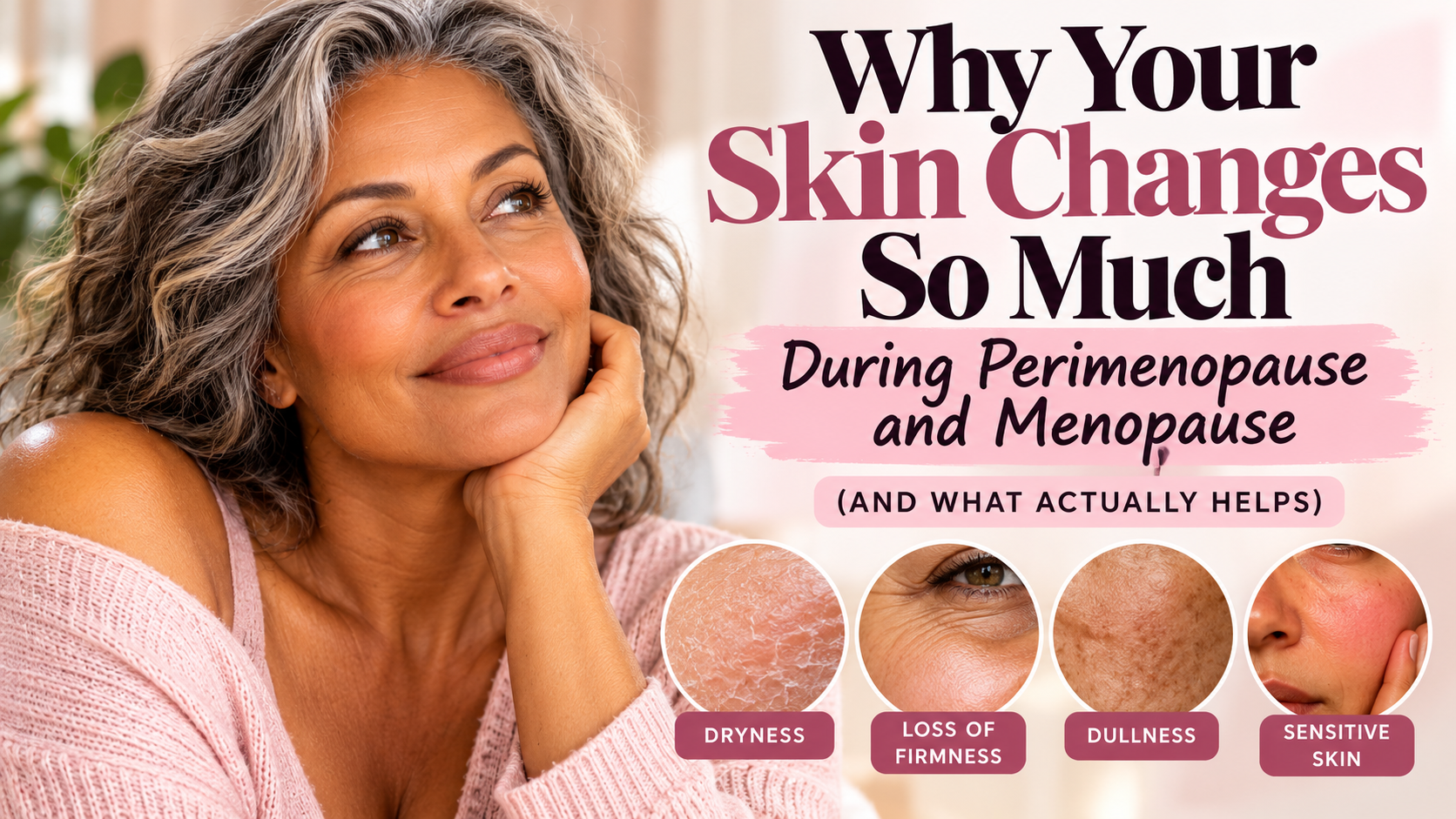
Why Your Skin Changes So Much During Perimenopause and Menopause (And What Actually Helps)
Dryness, sagging, dullness, and suddenly sensitive skin? Your hormones may have something to do with it. Here’s what’s happening—and how to give your skin what it needs without spending a fortune.
Have you ever looked in the mirror and thought, “Wait a minute. When did my skin start doing THAT?”
Maybe your favorite moisturizer suddenly isn’t moisturizing enough. Your cheeks feel dry, your skin looks a little less firm, or those fine lines seem more noticeable than they did last year.
And now every beauty company wants to sell you a $90 miracle cream.
Well, before you pull out your credit card, let’s talk about something those advertisements don’t always explain: estrogen.
During perimenopause and menopause, hormonal changes can affect your skin’s moisture, collagen, thickness, and ability to protect itself.
You don’t need to fight aging or buy everything in the skincare aisle. Once you understand what’s changing, you can build a simpler, more affordable routine that helps your skin feel comfortable and look its best.
1. What Estrogen Actually Does for Your Skin
Most of us know estrogen plays a role in our menstrual cycles. But did you know it also helps support healthy skin?
Think of estrogen as one of the behind-the-scenes helpers keeping your skin hydrated, supported, and resilient.
During perimenopause, estrogen levels fluctuate. After menopause, they remain much lower than during the reproductive years.
And your skin can feel the difference.
Collagen & Firmness
Estrogen helps support collagen, the protein that gives skin structure. Declining estrogen can contribute to thinner skin, fine lines, and reduced firmness.
Moisture & Natural Oils
Hormonal changes can affect skin hydration and oil production, leaving your face feeling drier than it used to.
Skin Barrier
Your skin barrier helps hold moisture in and keep irritants out. Changes in barrier function can make dryness and sensitivity more noticeable.
Texture & Appearance
Collagen loss, dryness, sun damage, and natural aging can make skin look less smooth or radiant.
Here’s something important: menopause isn’t the only reason skin changes. Genetics, sun exposure, smoking, medications, and natural aging all play a part.
But falling estrogen can make certain changes more noticeable around midlife.
2. The Perimenopause Skin Symptoms Nobody Warns You About
Everybody talks about hot flashes. But nobody seems to mention that your skin might suddenly start acting like it has an entirely different personality.
Here are some common changes and what may help.
Dryness That Won’t Quit
Your face feels tight after washing. Makeup clings to dry patches. Your old moisturizer barely makes a difference.
Try this: Switch to a gentle cleanser and a fragrance-free cream containing ceramides, glycerin, or hyaluronic acid. Apply moisturizer while your skin is slightly damp.
Thinner, More Delicate Skin
Your skin may look thinner or feel more fragile as collagen and supporting tissues change.
Try this: Avoid harsh scrubs and excessive exfoliation. Use moisturizer regularly and protect your skin from UV exposure.
Less Firmness Around the Face and Neck
You may notice changes around your cheeks, jawline, or neck as collagen, facial fat, and other supporting structures change with age.
Try this: Daily sunscreen and a well-tolerated retinoid may improve some signs of skin aging. But remember, creams cannot completely reverse structural sagging.
Dullness and Uneven Texture
Your complexion might look less bright, especially when dryness makes fine lines and roughness more visible.
Try this: Focus on moisture first. Once your skin feels comfortable, gentle exfoliation may help smooth surface texture.
Products Suddenly Make Your Skin Angry
A serum you’ve used for years might start stinging or causing redness.
Try this: Simplify your routine and stop irritating products. Persistent burning, redness, or itching may signal a skin condition that needs treatment.
Don’t assume every new skin symptom is caused by menopause. Sudden bruising, unusual rashes, skin tears, or persistent irritation deserve medical attention.
3. Other Hormones Worth a Second Look
Estrogen gets most of the attention, but other hormones can influence your skin too.
Thyroid Hormones
An underactive thyroid can contribute to dry skin, fatigue, constipation, and hair thinning. Because these symptoms sometimes overlap with menopause, it’s worth discussing them with your healthcare professional.
Cortisol
Cortisol helps regulate your body’s stress response. Chronic stress and poor sleep can interfere with skin barrier recovery and contribute to irritation.
That doesn’t mean stress causes every wrinkle. But getting enough rest and managing ongoing stress are worthwhile for your overall health.
Testosterone and Other Androgens
Changes in androgen balance may contribute to facial hair changes or breakouts during midlife.
However, androgens aren’t usually the main reason for menopause-related dryness and collagen loss.
Dealing with breakouts too? Read our guide to hormonal acne treatments.
4. Your New Skincare Routine: Simple, Gentle, and Affordable
Now let’s get practical.
If your skin is changing, you don’t necessarily need more products. You may simply need different ones.
And please don’t feel pressured to buy every serum recommended by someone on social media. Your skin doesn’t need a chemistry experiment twice a day.
Protect & Hydrate
Cleanse Gently
Choose a mild, fragrance-free cleanser. If your skin is very dry, a lukewarm water rinse may be enough in the morning.
Moisturize
Look for glycerin, ceramides, hyaluronic acid, or dimethicone. These ingredients can help your skin hold onto moisture.
Apply Sunscreen
Use broad-spectrum SPF 30 or higher. Sun protection helps prevent additional collagen damage and discoloration.
Cleanse, Treat & Restore
Wash Away the Day
Remove makeup and sunscreen with a gentle cleanser. Avoid hot water and aggressive scrubbing.
Consider a Retinoid
Retinol or prescription retinoids can help improve fine lines and uneven texture over time. Start slowly because they may irritate sensitive skin.
Use a Richer Moisturizer
A nourishing cream helps reduce moisture loss overnight. For especially dry areas, a small amount of plain petrolatum may help seal in moisture.
If money is tight, start with just three products: a gentle cleanser, a good moisturizer, and sunscreen. You can add targeted treatments later.
A $15 moisturizer that works for your skin is a better investment than a $100 cream that leaves your face irritated.
Retinoid safety: Avoid retinoids during pregnancy or when trying to conceive. Ask a healthcare professional if you’re unsure whether a retinoid is suitable for you.
5. Everyday Habits That Support Your Skin
Beautiful skin isn’t only about what you put on your face. Nutrition, sleep, and daily habits matter too.
Eat Enough Protein
Eggs, beans, fish, tofu, yogurt, and lean meats provide amino acids your body uses to maintain and repair tissues.
Get Your Vitamin C
Strawberries, oranges, peppers, and broccoli provide vitamin C, which your body needs for normal collagen synthesis.
Include Healthy Fats
Olive oil, nuts, seeds, and fatty fish can be part of a balanced diet that supports overall health.
Make Sleep a Priority
Sleep disruption is common during menopause. Addressing night sweats and sleep problems can support your well-being.
What About Drinking More Water?
Staying adequately hydrated is important. But drinking gallons of water won’t automatically erase wrinkles or repair a weakened skin barrier.
For dry skin, your moisturizer still has a job to do.
Do You Need Collagen or Hormone Supplements?
Not necessarily.
Some collagen supplements have shown modest improvements in skin hydration or elasticity in studies, but evidence varies and some research has industry funding.
Products promising to “balance your hormones” or “restore estrogen naturally” deserve extra caution. Their marketing claims may be stronger than the evidence.
Before taking supplements, check for medication interactions and discuss any concerns with a healthcare professional.
6. When Should You Talk to Your Doctor?
Most menopause-related skin changes can be managed with a gentle skincare routine. But some symptoms deserve a closer look.
- Severe dryness that doesn’t improve with basic skincare.
- Sudden or significant hair loss.
- Unexplained bruising or unusually fragile skin.
- Persistent rashes, burning, or itching.
- Hot flashes or night sweats disrupting your daily life.
- Symptoms suggesting a thyroid condition.
Can Hormone Therapy Improve Your Skin?
Menopausal hormone therapy may influence skin hydration, collagen, and thickness. Some research has found improvements in these measures.
But hormone therapy isn’t generally recommended just to treat wrinkles or cosmetic skin aging.
It’s primarily considered for appropriate menopause symptoms and certain medical indications. The benefits and risks depend on your individual health history.
Also, a single estrogen blood test usually isn’t needed to identify typical perimenopause in women over 45, because hormone levels can fluctuate considerably.
Bottom line: If your symptoms are affecting your quality of life, have a conversation with your healthcare professional instead of trying to diagnose or treat hormone changes on your own.
7. More Beauty Never Fades Articles You’ll Love
Hormones aren’t the only thing influencing your complexion. Explore these related topics to better understand your skin.
Struggling With Adult Acne?
Discover why hormonal breakouts happen and how to approach treatment without overwhelming your skin.
Read the Acne Guide →What About the Gut-Skin Connection?
Learn what researchers know about the relationship between gut health and your complexion.
Explore the Connection →Frequently Asked Questions
Why did my skin suddenly get so dry in my 40s?
Fluctuating estrogen during perimenopause can affect skin hydration and barrier function. Weather, harsh products, medications, and thyroid conditions may also contribute.
Does menopause make your skin age faster?
Estrogen decline can accelerate some changes in collagen, thickness, and hydration. However, genetics, UV exposure, and natural aging also influence your skin’s appearance.
Can you rebuild collagen after menopause?
Retinoids and certain professional treatments may stimulate collagen production and improve some visible signs of aging. However, no topical product can completely reverse all age-related changes.
What’s the best moisturizer for menopausal skin?
Look for fragrance-free creams with ceramides, glycerin, petrolatum, or other effective moisturizing ingredients. The best choice depends on your skin’s dryness, sensitivity, and preferences.
Do expensive anti-aging creams work better?
Not automatically. Affordable products can contain many of the same evidence-supported ingredients found in luxury skincare.
Your Skin Is Changing. That Doesn’t Mean Your Beauty Is Fading.
Perimenopause and menopause can bring changes nobody fully prepared us for.
But your skin isn’t failing you. It’s responding to a new stage of life.
And while you can’t stop every biological change, you can take care of your skin in ways that help it stay comfortable, protected, and healthy.
You don’t need to look 25 forever. You deserve to feel beautiful at 45, 55, 65, and beyond.
Because beauty doesn’t come with an expiration date.
Ready to Build a Skincare Routine That Actually Works?
Now that you understand why your skin is changing, let’s find products and routines that make sense for your skin today.
Step 1: Build Your Anti-Aging Skincare Routine → Step 2: Find the Best Products for Mature Skin →Simple routines. Practical advice. Beauty at every age.
Sources & Further Reading
- American Academy of Dermatology: Anti-Aging Skincare
- The Menopause Society: Menopause Education
- MedlinePlus: Menopause
- NIH: Vitamin C and Collagen Synthesis
Medical disclaimer: This content is for general education and does not replace individualized medical advice. Consult a qualified healthcare professional about persistent symptoms, supplements, or hormone therapy.