
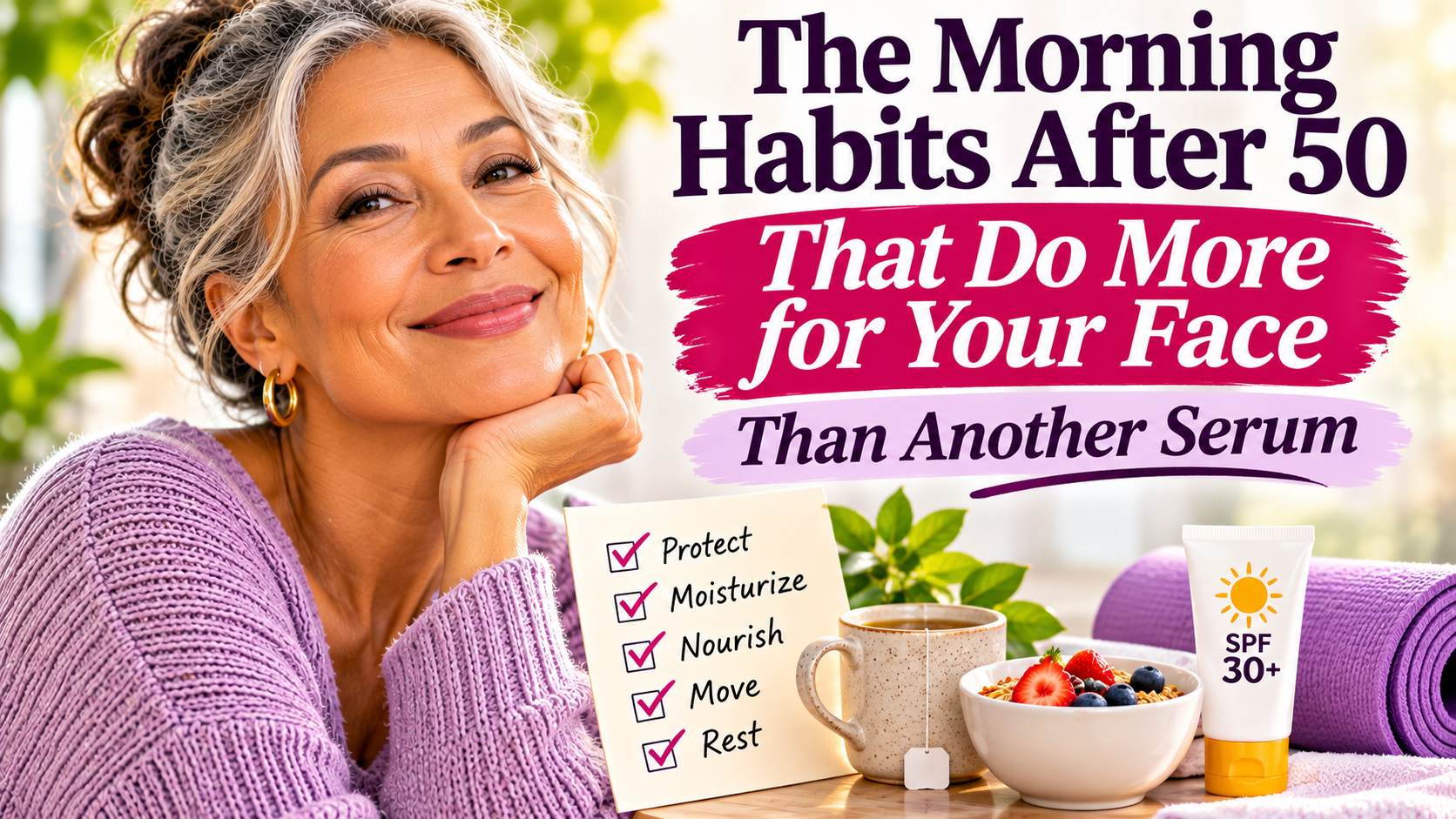
Before you spend another $60 on a serum, take a look at what you’re doing every morning.
Because some of the most useful things you can do for mature skin don’t come in an expensive bottle.
They come from small habits you can actually stick with.

Ladies, let’s talk about something.
Have you noticed how the skincare industry always seems to have one more product you’re supposed to buy?
One serum for wrinkles.
Another for dark spots.
Another for hydration.
And somehow, after spending all that money, your skin can still feel dry, tight, or irritated.
Now, I’m not saying skincare products don’t work.
Some ingredients have good research behind them.
But if you’re over 50, your morning habits deserve just as much attention as the products sitting on your bathroom counter.
As we age, our skin naturally changes. Some women experience more dryness, changes in elasticity, and greater sensitivity, particularly during and after menopause.
And while no morning routine can stop aging, certain habits can help protect your skin and keep it feeling comfortable.
You don’t need a complicated 12-step skincare routine. Consistent sun protection, gentle cleansing, appropriate moisturizing, and healthy daily habits are a strong foundation for skin care after 50.
Stop Washing Away Your Skin’s Natural Moisture
Let’s start with the first thing many of us do in the morning.
Wash our face.
Now, cleansing is important. But there’s a difference between cleaning your skin and stripping it.
If your face feels tight, rough, or uncomfortable after washing, your cleanser may be too harsh.
As skin becomes drier with age, strong cleansers and very hot water can make that dryness worse.
Try This Instead
- Use lukewarm rather than hot water.
- Choose a gentle, fragrance-free cleanser.
- Avoid aggressive scrubbing.
- Pat your face dry instead of rubbing it.
- If your skin is very dry, a simple water rinse in the morning may be enough for some people.
You don’t need your face to feel squeaky clean.
You need it to feel clean and comfortable.
Moisturize Before Your Skin Feels Completely Dry
Here’s a small habit that can make a noticeable difference in how your skin feels.
Apply moisturizer while your skin is still slightly damp, unless your product directions say otherwise.
This can help support moisture retention.
Look for ingredients such as:
- Glycerin: Helps attract and retain water.
- Hyaluronic acid: A humectant that helps skin hold water.
- Ceramides: Help support the skin barrier.
- Petrolatum or dimethicone: Can help reduce moisture loss.
And don’t assume you need a separate serum containing every one of these ingredients.
A good moisturizer may already contain several of them.
If your skin feels comfortable with one moisturizer, you may not need anything else for hydration.
Want to know whether adding facial oil makes sense?
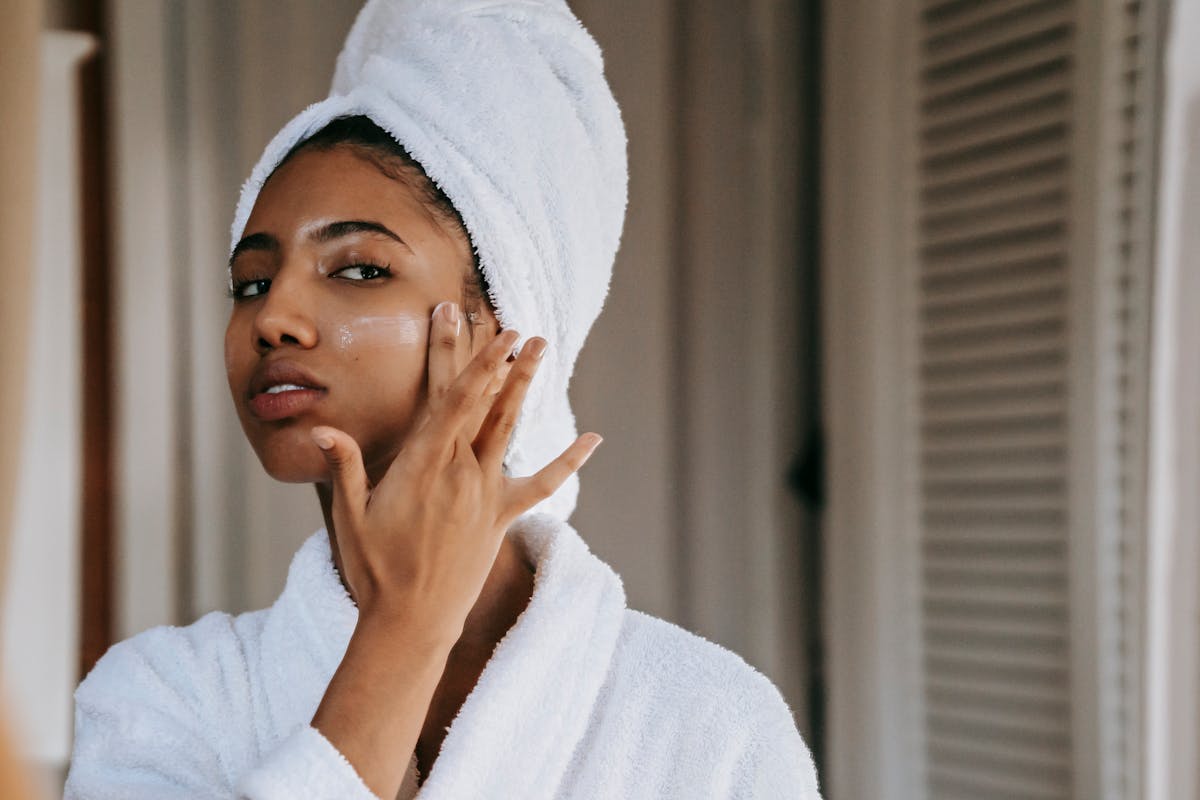
Wear Sunscreen Even When You’re Not Planning a Beach Day
If there’s one skincare habit I’d encourage women over 50 to take seriously, it’s this one.
Daily sun protection.
Ultraviolet radiation contributes to premature skin aging, including wrinkles, uneven pigmentation, and changes in skin texture.
It also increases the risk of skin cancer.
And yes, women with darker skin tones need sun protection too.
Melanin provides some natural protection, but it does not eliminate UV damage or skin cancer risk.
What to Do
- Choose a broad-spectrum sunscreen with SPF 30 or higher.
- Apply it to exposed skin, including your face, ears, and neck.
- Reapply approximately every two hours while outdoors, and after swimming or sweating, according to the product directions.
- Use shade, hats, and protective clothing when possible.
And don’t mix facial oil into your sunscreen or dilute it with another product.
Sunscreen needs to form an appropriate protective layer to work as intended.
It’s not the fanciest skincare habit, but it has much stronger evidence for preventing photoaging than many trendy serums.
Drink Water, but Don’t Expect It to Erase Wrinkles
You’ve probably heard somebody say that drinking more water is the secret to youthful skin.
Well, let’s be realistic.
Staying adequately hydrated is important for overall health.
And dehydration can affect how you feel and may influence your skin’s appearance.
But drinking extra water beyond what your body needs has not been shown to erase wrinkles or replace moisturizer.
So there’s no need to force yourself to drink excessive amounts of water in hopes of reversing aging.
A Better Morning Habit
Have water with breakfast or when you’re thirsty, and maintain appropriate fluid intake throughout the day.
Your needs can vary depending on your activity, climate, medications, and medical conditions.
If you have been advised to limit fluids, follow your healthcare professional’s instructions.
And remember: drinking water and moisturizing your skin serve different purposes.
Eat Breakfast That Supports Your Skin, Not Just Your Sweet Tooth
Now, I’m not going to tell you that eating one particular food will magically make you look ten years younger.
That’s not how skin biology works.
But your body needs adequate nutrients to maintain and repair tissues.
Protein, essential fatty acids, vitamins, and minerals all play roles in normal skin health.
And if your diet is consistently lacking important nutrients, buying another skincare product won’t correct that deficiency.
Simple Breakfast Ideas
Greek Yogurt and Berries
Provides protein along with nutrients from fruit. Choose an option that fits your dietary needs.
Eggs and Whole-Grain Toast
A practical combination of protein and carbohydrates for a balanced morning meal.
Oatmeal With Nuts
Provides fiber and, depending on the toppings, healthy fats and additional nutrients.
Tofu Scramble With Vegetables
A plant-based option that provides protein and a variety of nutrients.
None of these meals is a miracle anti-aging treatment.
They’re simply ways to support your overall nutrition.
And that’s a better investment than relying on expensive beauty supplements while ignoring your regular diet.

Get Moving Instead of Expecting Skincare to Do Everything
Here’s something that doesn’t get nearly as much attention in beauty advertisements.
Regular physical activity supports overall health, sleep, circulation, and well-being.
And while exercise isn’t a proven way to erase facial wrinkles, it can be part of a healthy aging routine.
You don’t need to start your morning with an intense workout.
Try something that works for your body.
- A short walk.
- Gentle stretching.
- Chair-based movement.
- Light resistance exercises.
- A few minutes of comfortable movement outdoors.
The goal isn’t to punish your body.
It’s to make movement a regular part of your life.
If you have mobility limitations or health conditions, adapt your routine to your abilities and follow any medical guidance you’ve received.
Protect Your Sleep and Give Yourself a Calmer Start
Now, let’s talk about something a lot of women struggle with after 50.
Sleep.
Hot flashes, stress, changing schedules, and other health concerns can make restful sleep harder to get.
And poor sleep can affect how refreshed you look and feel.
Research has linked chronic poor sleep quality with changes in skin aging and barrier recovery, although that doesn’t mean one bad night permanently damages your face.
Try a Gentler Morning
- Wake up at a reasonably consistent time.
- Get some natural daylight when possible.
- Take a few minutes to stretch, breathe, pray, or sit quietly.
- Avoid immediately filling your morning with stressful notifications if you can.
- Build habits that support a consistent bedtime later that evening.
Stress management isn’t a replacement for medical treatment or skincare.
But it can support your overall well-being and make your routine easier to maintain.
For more on the relationship between stress and appearance, explore our article about stress, cortisol, skin, and hair .
Your Simple 10-Minute Morning Skincare Routine After 50
Now that we’ve talked about the habits, here’s how to put the skincare essentials together.
Wash with a mild cleanser or rinse with lukewarm water, depending on your skin’s needs.
Apply a suitable moisturizer. You don’t necessarily need a separate hydrating serum.
Use broad-spectrum SPF 30 or higher on exposed skin. Allow it to settle according to the product directions.
Take a moment for gentle movement, quiet reflection, or planning your day.
That’s it.
No complicated layering chart.
No ten different bottles.
Just a realistic foundation you can repeat.
What About Vitamin C, Retinol, and Other Serums?
Let’s be clear: some serums can be useful.
Vitamin C products may help with certain pigmentation concerns, depending on their formulation.
Retinoids have evidence for treating some signs of photoaging.
And certain targeted ingredients can be helpful for specific skin concerns.
But that doesn’t mean everyone needs all of them.
If your skin is already comfortable and you’re happy with your routine, you don’t have to add another active ingredient.
If you do have a specific concern, choose a product based on that concern instead of buying whatever is trending.
For help deciding whether a retinoid belongs in your routine, read:
Retinol or Bakuchiol After 40? How to Pick the One Your Skin Will Actually Tolerate
Where Should You Spend Your Skincare Money First?
Worth Prioritizing
- Gentle cleanser, if needed.
- Moisturizer suited to your skin.
- Broad-spectrum sunscreen.
- Treatment for a diagnosed skin condition when appropriate.
Often Optional
- Multiple hydrating serums.
- Expensive facial oils.
- Extra exfoliating products.
- Trendy beauty supplements without a clear need.
A product’s price doesn’t tell you whether it’s right for your skin. A basic, fragrance-free moisturizer and reliable sunscreen may be more useful than an expensive serum that irritates your face.
Five Signs Your Morning Routine Needs Simplifying
If any of these sound familiar, your skin may benefit from a simpler approach:
- Your face stings whenever you apply products.
- You’re using several exfoliating ingredients at once.
- Your skin feels dry even though you’re layering multiple serums.
- You keep buying new products before giving the previous ones time to work.
- You’re skipping sunscreen because your routine already feels too complicated.
Persistent burning, rash, or worsening irritation deserves attention from a dermatologist.
And if you’re dealing with new or changing skin lesions, don’t assume they’re simply signs of aging.
The Bottom Line: Your Morning Habits Matter More Than Another Trend
Here’s what I want you to remember.
Healthy-looking skin after 50 isn’t about finding one miracle product.
It’s about protecting your skin, keeping it comfortable, and supporting your overall health.
Wash gently.
Moisturize consistently.
Protect yourself from the sun.
Eat well, move in ways that work for you, and take your sleep seriously.
And if you want to use a serum for a specific concern, that’s perfectly fine.
Just don’t let the beauty industry convince you that you need another bottle every time you notice a new line on your face.
Because taking care of your skin should make your life easier—not more expensive.
And remember, Beauty Never Fades.

Give Your Skin Seven Days of Consistency
Before buying another serum, try a simple morning routine for one week.
Use a gentle cleanser if needed, moisturize, and apply sunscreen every morning.
Pay attention to how comfortable your skin feels and whether the routine is easy to maintain.
Seven days won’t reverse wrinkles or sun damage, but it can help you establish habits worth keeping.
Then decide whether your skin needs anything more.
Frequently Asked Questions
What is the most important morning skincare step after 50?
Sun protection is especially important for preventing UV-related skin damage. Gentle cleansing and moisturizing are also valuable, particularly for dry skin.
Do women over 50 need a vitamin C serum?
No. Vitamin C may be useful for certain concerns, but it isn’t an essential step for everyone. A simple routine with moisturizer and sunscreen can be appropriate.
Should I wash my face every morning?
It depends on your skin. Some people benefit from gentle cleansing, while those with very dry skin may prefer a lukewarm water rinse in the morning.
Can drinking more water make wrinkles disappear?
No. Adequate hydration supports general health, but extra water has not been shown to eliminate wrinkles.
How long does it take to see healthier-looking skin?
Improved skin comfort may occur relatively quickly with appropriate moisturizing. Changes in pigmentation, texture, and photoaging usually take longer and depend on the treatment and individual.
Sources and Further Reading
- American Academy of Dermatology: Dermatologists’ Tips for Relieving Dry Skin
- American Academy of Dermatology: Sunscreen Guidance
- American Academy of Dermatology: Anti-Aging Skin Care
- Clinical and Experimental Dermatology: Sleep Quality and Skin Aging
- National Institute on Aging: Healthy Aging
Medical disclaimer: This article is for educational purposes and does not replace professional medical advice. If you have persistent irritation, a diagnosed skin condition, or concerning skin changes, consult a qualified healthcare professional.