
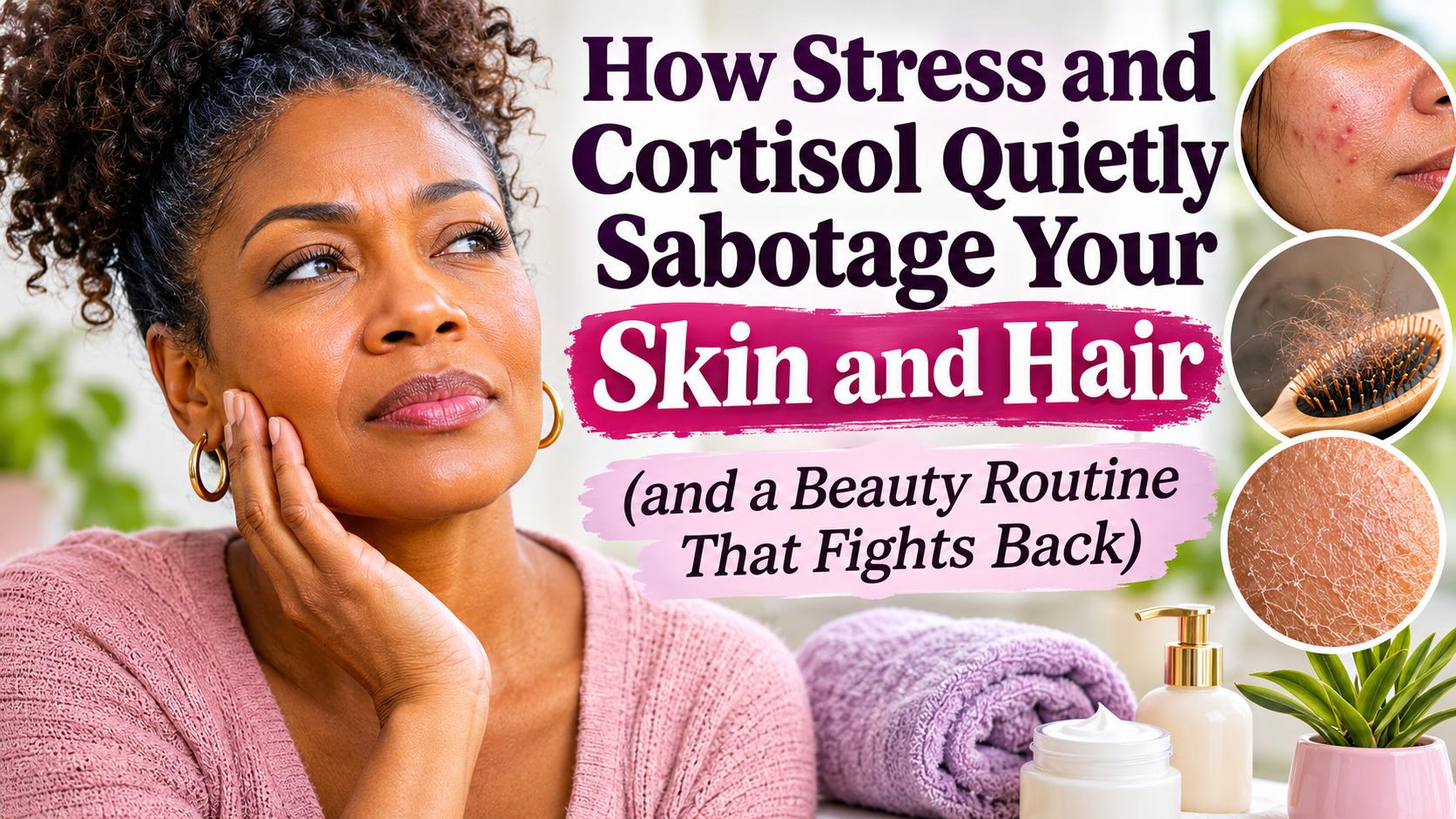
Your skin is breaking out. Your hair seems thinner. And your favorite beauty products suddenly aren’t doing what they used to.
Before you spend another hundred dollars on skincare or hair products, consider something your beauty routine might be missing: the effects of ongoing stress.

Have you ever looked in the mirror after a stressful week and wondered what happened?
Your skin looks tired.
You’re suddenly dealing with breakouts.
Your scalp feels different, and your hair seems to be shedding more than usual.
So what do we do?
Buy another serum. Switch moisturizers. Try a different shampoo. Maybe order that expensive hair treatment everybody on social media is talking about.
But what if the problem isn’t entirely on the outside?
Stress can affect your skin and hair through changes in your body’s stress response, inflammation, sleep, and everyday habits.
And cortisol, one of the hormones involved in that response, is part of the story.
Let’s look at what happens and how to build a beauty routine that supports your skin, hair, and overall wellbeing.
1. What Is Cortisol, and Why Does Your Body Need It?
Cortisol is a hormone produced by your adrenal glands.
It’s commonly called the stress hormone because it plays an important role in your body’s response to physical and emotional challenges.
But cortisol isn’t your enemy.
Your body needs it to help regulate metabolism, blood pressure, inflammation, and your normal sleep-wake cycle.
When you face a stressful situation, your body activates systems that help you respond.
That’s a normal and useful process.
But when stress becomes persistent, it may influence skin function, sleep quality, immune activity, and other processes.
Having breakouts, hair shedding, or dry skin does not automatically mean your cortisol is abnormally high. Many other factors can cause these symptoms, including menopause, thyroid disorders, nutritional deficiencies, medications, and skin conditions.
2. Six Ways Stress Can Affect Your Skin and Hair
Unexpected Breakouts
Stress-related hormonal changes can worsen acne in people who are prone to breakouts.
Dry, Irritated Skin
Psychological stress may interfere with normal skin-barrier function and increase moisture loss.
Excessive Hair Shedding
Significant stress can trigger temporary hair shedding known as telogen effluvium.
Skin Flare-Ups
Stress can aggravate conditions such as eczema and psoriasis in susceptible people.
Slower Skin Recovery
Stress can affect wound healing and may complicate recovery from skin irritation.
Disrupted Beauty Habits
Stress may interfere with sleep, balanced eating, and consistent skincare and hair-care routines.
3. Your Skin Barrier Might Need More Help Than Another Serum
Your skin barrier is the outermost protective layer of your skin.
Think of it like a wall that helps keep moisture in and irritants out.
When that barrier isn’t functioning properly, your skin may feel dry, tight, itchy, or unusually sensitive.
Research suggests psychological stress can interfere with skin-barrier function.
That’s why irritated skin doesn’t necessarily need stronger exfoliating products.
Sometimes it needs a gentler routine.
Skin-Friendly Ingredients Worth Considering
- Ceramides: Help support the skin’s protective barrier.
- Glycerin: Helps attract moisture to the skin.
- Hyaluronic acid: Can help improve hydration.
- Petrolatum: Helps reduce moisture loss, especially on very dry areas.
- Niacinamide: May support barrier function, although some formulas can irritate sensitive skin.
Choose fragrance-free products if your skin is easily irritated, and introduce new ingredients gradually.
4. Can Stress Really Make Your Hair Fall Out?
Yes. Certain types of stress can contribute to excessive hair shedding.
One common condition is called telogen effluvium.
It happens when a significant stressor shifts more hair follicles than usual into the resting phase of the hair-growth cycle.
Then, weeks or months later, you may notice increased shedding.
That delay can make the cause difficult to recognize.
Possible triggers include major emotional stress, illness, surgery, childbirth, rapid weight loss, inadequate nutrition, and some medications.
Stress-related shedding is often temporary, but recovery takes time.

What About Locs, Braids, and Protective Styles?
Protective styling can reduce daily manipulation, but a style isn’t protective if it creates excessive tension.
Tight loc maintenance, heavy extensions, and hairstyles that repeatedly pull on the hairline can contribute to traction alopecia.
If your scalp feels sore, your edges are thinning, or you’re noticing bumps around tightly styled hair, the tension may be too much.
Looser styling and early professional assessment can help prevent further damage.
Seek an evaluation for bald patches, scalp pain, redness, scaling, progressive hairline loss, or persistent shedding. Thyroid problems, iron deficiency, autoimmune conditions, and other medical causes may also contribute to hair loss.
5. Your Morning Beauty Routine for Stressed Skin
You don’t need a complicated 12-step routine to take care of your face.
Especially when your skin is already irritated.
Start with the basics.
Four Simple Steps
Use lukewarm water and a mild cleanser if needed. Avoid harsh scrubbing or products that leave your skin feeling stripped.
Apply a moisturizer appropriate for your skin type. Look for ingredients that help maintain hydration.
Use broad-spectrum SPF 30 or higher on exposed skin. Sun protection helps prevent additional skin damage and discoloration.
Try gentle breathing, prayer, meditation, stretching, or another calming activity that works for you. These habits can support stress management, even though they aren’t direct treatments for skin disease.
That’s it.
Cleanse, moisturize, protect, and take care of yourself.
No need to make your face work overtime because life already has you doing enough of that.
6. Your Evening Skin and Hair Reset
Evening Skincare
- Remove makeup and sunscreen with a gentle cleanser.
- Apply moisturizer while your skin is slightly damp.
- Reduce irritating exfoliants if your skin feels sensitive.
- Use prescribed acne or eczema treatments as directed.
- Keep the routine simple enough to repeat consistently.
Evening Hair Care
- Avoid tight hairstyles that pull on the scalp.
- Detangle gently using techniques suited to your hair texture.
- Limit excessive heat and harsh chemical treatments.
- Consider a satin or silk bonnet or pillowcase to reduce friction.
- Pay attention to scalp itching, pain, or unusual shedding.
Remember, hair products can improve manageability and reduce breakage, but they cannot correct every cause of hair loss.
7. Why Stress and Menopause Can Be a Complicated Combination
During perimenopause and menopause, changing estrogen levels can affect skin hydration, texture, and elasticity.
At the same time, many women are dealing with demanding schedules, family responsibilities, financial pressure, and disrupted sleep.
These factors can overlap.
So if your skin suddenly feels different at 45 or 50, it may not be one single hormone causing everything.
Stress, hormonal transitions, genetics, medical conditions, medications, and skincare habits may all contribute.
That’s why it’s better to understand your symptoms than to assume every problem is caused by cortisol.
Read our related guide:
Why Your Skin Changes During Perimenopause and Menopause .
8. Food, Sleep, and Movement Matter Too
Beauty products are only one part of your routine.
Your skin and hair also depend on overall health.

Nutrition
Eat enough food and include varied sources of protein, healthy fats, fruits, vegetables, and whole grains.
Iron, zinc, and other nutrients matter for normal hair growth, but taking extra supplements when you’re not deficient won’t necessarily improve your hair.
Too much of certain nutrients can even contribute to hair problems.
Sleep
Most adults need at least seven hours of sleep each night.
Consistent sleep habits support overall health and can make stress easier to manage.
Movement
Walking, strength training, stretching, and other enjoyable activities can help support physical and emotional wellbeing.
Choose movement that fits your abilities and health needs.
If low energy is another concern, explore:
Feeling Drained Lately? What Your Body Is Really Lacking .
9. Your Seven-Day Skin, Hair, and Stress Reset
This isn’t a promise of glowing skin or thicker hair in seven days.
It’s a way to establish habits that may support your wellbeing over time.
Set aside unnecessary products and focus on gentle cleansing, moisturizing, and sunscreen.
Identify tight styles, excessive heat, or habits that may contribute to breakage.
Choose a consistent bedtime and give yourself time to wind down.
Include protein and a variety of nutrient-rich foods throughout the day.
Try a comfortable walk, stretching, or another activity you enjoy.
Identify one obligation, habit, or distraction you can realistically change.
Note changes in your skin, hair, sleep, and stress. Make an appointment if symptoms are persistent, severe, or concerning.
10. Should You Buy Cortisol-Lowering Supplements?
You’ve probably seen advertisements promising to lower cortisol, reverse stress-related aging, or restore your hair.
Be careful with those claims.
There isn’t one supplement proven to reverse all stress-related skin or hair changes.
Some supplements can interact with medications or cause side effects.
And symptoms such as fatigue, hair thinning, weight changes, and breakouts do not prove that cortisol is elevated.
Testing cortisol is generally reserved for situations where a healthcare professional suspects a specific hormonal disorder.
Focus first on a consistent skincare routine, gentle hair care, appropriate nutrition, sleep, and medical evaluation when needed. Don’t assume an expensive supplement is the missing solution.
11. Frequently Asked Questions
Can cortisol cause acne after 40?
Stress-related hormonal changes can worsen acne, but midlife breakouts may also involve menopause-related changes, genetics, skincare products, and other factors.
Can stress cause hair thinning?
Yes. Significant stress can trigger temporary excessive shedding known as telogen effluvium. Other causes of thinning should also be considered.
Does lowering stress reverse wrinkles?
Stress management supports overall wellbeing and may help some stress-aggravated skin problems. It has not been shown to erase established wrinkles.
What is the best skincare routine for stressed skin?
A gentle cleanser, suitable moisturizer, and daily broad-spectrum sunscreen are a good foundation. Specific conditions may require additional treatment.
How long does stress-related hair shedding last?
Shedding often begins a few months after a major stressor and may improve over subsequent months. Persistent or unusual hair loss should be evaluated.
Should I get my cortisol checked because my hair is falling out?
Not routinely. A healthcare professional can evaluate the pattern of hair loss and determine whether any testing, including hormone tests, is appropriate.
The Bottom Line: Your Beauty Routine Should Support Your Whole Self
Sometimes your skin isn’t asking for another serum.
And your hair isn’t necessarily asking for another bottle of oil.
Sometimes you need a gentler routine, better sleep, less tension on your scalp, or help addressing an ongoing health concern.
Stress can affect your skin and hair, but it doesn’t explain everything.
The goal isn’t to eliminate cortisol or chase a perfect appearance.
It’s to build habits that help you feel healthier, more comfortable, and more confident.
Because taking care of yourself isn’t just about looking younger. It’s about feeling good in the skin you’re in.
And that’s what Beauty Never Fades is all about.
Your Skin Changes. Your Routine Can Change With It.
Explore our guide to menopause-related skin changes and learn why the skincare routine that worked at 30 may need adjusting after 40.
Explore Skin Changes After 40 →Sources & Further Reading
- American Academy of Dermatology: Stress and Skin Conditions
- American Academy of Dermatology: Hair Shedding
- Mayo Clinic: Stress and Hair Loss
- American Academy of Dermatology: Dry Skin Care
Medical disclaimer: This article provides general educational information and does not replace professional medical advice, diagnosis, or treatment. Consult a qualified healthcare professional for persistent skin changes, scalp symptoms, or hair loss.