
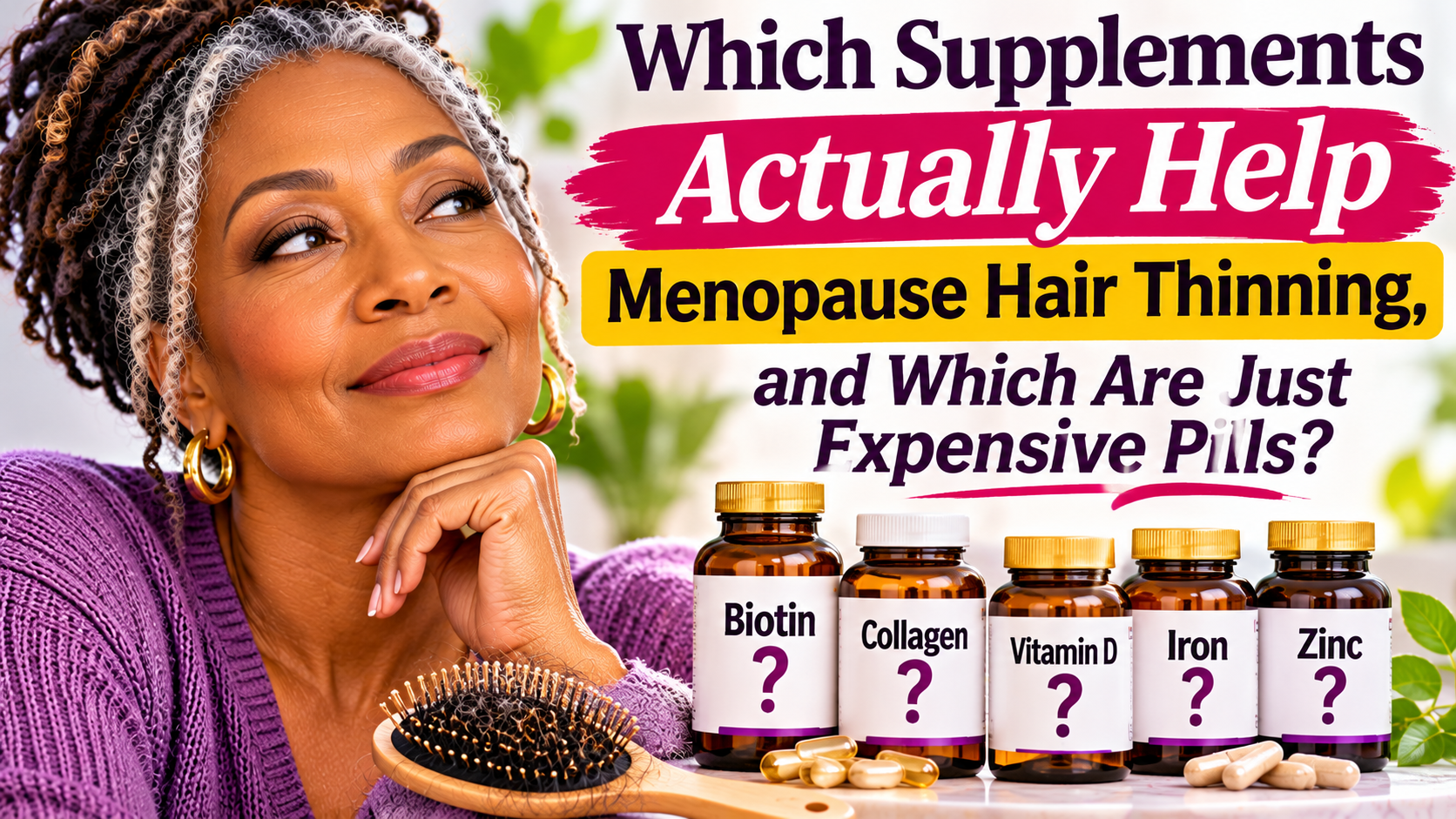
Your hair is getting thinner, your part is getting wider, and suddenly everybody wants to sell you a bottle of hair-growth vitamins.
But are those supplements actually helping your hair—or just helping somebody else’s bank account?
Let’s talk about what the research says before you spend another dollar.

Ladies, have you noticed how many products promise thicker, longer, healthier hair after 40?
Hair gummies. Collagen powders. Biotin capsules. Special menopause blends.
And some of them cost enough to make you wonder whether you’re buying vitamins or making a car payment!
Here’s the problem.
Not every type of hair loss responds to supplements.
If you’re losing hair because of a nutritional deficiency, correcting that deficiency may help.
But if your hair is thinning because of genetics, inflammation, or a scarring scalp condition, supplements alone usually won’t address the cause.
Let’s separate the products worth discussing with your healthcare professional from the ones that deserve a little more skepticism.
Iron, vitamin D, zinc, and certain other nutrients may be helpful when someone has a deficiency. High-dose biotin, collagen, and expensive hair-growth blends have much weaker evidence for regrowing hair in women who already get adequate nutrition.
1. Why Hair Often Changes During Menopause
During perimenopause and menopause, hormonal changes can affect hair growth patterns.
Some women notice that their ponytail feels smaller, their part looks wider, or their scalp becomes more visible.
Female-pattern hair loss becomes more common with age and after menopause.
But menopause isn’t the only possible explanation.
Hair thinning can also be associated with:
- Hereditary female-pattern hair loss.
- Iron deficiency or inadequate nutrition.
- Thyroid disorders.
- Major illness, stress, or rapid weight loss.
- Medication effects.
- Traction from tight hairstyles.
- Inflammatory or scarring scalp conditions.
That’s why it’s important to pay attention to how and where your hair is thinning.
A widening part, sudden shedding, thinning edges, and a bald patch on the crown may have different causes.
And each one may require a different treatment.
2. Iron: One Supplement That Can Matter When You’re Deficient
Iron Supplements
Iron helps your body make healthy red blood cells and supports many normal bodily functions.
Iron deficiency can contribute to hair shedding.
Women with heavy menstrual bleeding during perimenopause may be at increased risk of iron deficiency.
But taking extra iron when you don’t need it isn’t a good idea.
Too much iron can cause side effects and, in severe cases, poisoning.
Our verdict: If you have hair thinning along with fatigue or heavy periods, ask whether a complete blood count and ferritin or other iron studies are appropriate.
Don’t start high-dose iron just because a hair-growth advertisement recommends it.
3. Vitamin D: Important for Health, but Not a Miracle Hair Pill
Vitamin D Supplements
Vitamin D plays important roles in bone health and other body functions.
Some studies have found associations between low vitamin D levels and certain types of hair loss.
However, that doesn’t prove vitamin D supplements will regrow hair in everyone.
And having a normal vitamin D level doesn’t mean taking more will make your hair thicker.
Our verdict: Worth addressing if you’re deficient or have another reason to supplement, but don’t expect it to reverse hereditary hair loss.

4. Biotin: The Hair Vitamin That Gets More Attention Than It Deserves
Now let’s talk about one of the biggest names in hair supplements.
Biotin.
It’s everywhere.
Hair gummies, beauty vitamins, shampoos, and expensive growth formulas.
Biotin is a B vitamin that your body needs for normal metabolism.
And a true biotin deficiency can cause hair thinning.
But biotin deficiency is uncommon in people eating a varied diet.
For people who aren’t deficient, there is little scientific evidence that taking high-dose biotin makes hair grow faster or thicker.
Here’s something else you need to know.
High-dose biotin can interfere with certain laboratory tests.
That includes some thyroid tests and other important blood tests.
Skip expensive high-dose biotin gummies unless there’s a specific medical reason to take them. Tell your healthcare team about biotin supplements before having blood tests.
5. Zinc, B12, and Protein: Helpful Only When Something Is Missing
Zinc
Zinc is necessary for normal cellular function, and deficiency can contribute to hair loss.
But excessive zinc can cause problems, including copper deficiency.
Our verdict: Correct a deficiency if one is identified; don’t take high doses without guidance.
Vitamin B12
Vitamin B12 is important for red blood cell formation and nervous system health.
People following vegan diets or taking certain medications may be at greater risk of deficiency.
However, B12 supplements are not proven hair-growth treatments for people with adequate B12.
Our verdict: Useful when needed, not a universal hair-thickening solution.
Protein
Hair is made largely of keratin, a protein.
If you’re consistently eating too little protein, that may contribute to hair problems.
But you don’t automatically need expensive protein powders.
Eggs, beans, fish, tofu, yogurt, and other protein-rich foods can help you meet your needs.
Our verdict: Prioritize adequate food intake first. Supplements may be useful when diet alone isn’t sufficient.
6. Collagen, Saw Palmetto, and Expensive Hair Gummies: Are They Worth It?
Here’s where supplement marketing gets especially creative.
You’ll see promises about restoring hair density, blocking hormones, and waking up dormant follicles.
But the research often isn’t as impressive as the packaging.
Collagen Powders
Collagen is a protein supplement, but convincing clinical evidence that ordinary collagen supplements reverse menopause-related hair thinning is lacking.
Verdict: Optional as a protein source, not a proven hair-regrowth treatment.
Saw Palmetto
Saw palmetto is marketed for its possible effects on androgen-related pathways.
Some small studies have investigated it for hair loss, but the evidence is limited and products vary.
It may interact with medications and is not appropriate for everyone.
Verdict: Not a first-choice treatment for female-pattern hair loss.
Omega-3 Hair Supplements
Omega-3 fatty acids are important nutrients, and some small studies of combination supplements have reported improvements in hair measures.
However, there isn’t convincing evidence that ordinary fish oil capsules reliably reverse menopause hair thinning.
Verdict: Consider omega-3 intake for general nutritional needs, not as a guaranteed hair-growth treatment.
Premium Hair-Growth Gummies and Blends
Some branded formulas combine biotin, vitamins, herbs, and proprietary blends.
Evidence for a particular formula cannot automatically be applied to every competing product.
And expensive blends may duplicate nutrients you’re already getting from food or other supplements.
Verdict: Don’t pay premium prices without checking the exact ingredients, doses, and independent evidence for that formula.
7. Supplement Comparison: What’s Worth Your Money?
| Supplement | When It May Help | Our Verdict |
|---|---|---|
| Iron | Iron deficiency | Worth correcting when deficient |
| Vitamin D | Inadequate intake or deficiency | Useful for a demonstrated need |
| Zinc | Zinc deficiency | Targeted use only |
| Vitamin B12 | B12 deficiency | Targeted use only |
| Protein supplement | Inadequate protein intake | Food first; supplement if needed |
| High-dose biotin | Uncommon biotin deficiency | Usually skip without deficiency |
| Collagen | No established menopause hair-regrowth benefit | Optional, not essential |
| Saw palmetto | Limited preliminary research | Not first-line |
| Omega-3 | General nutritional needs; limited hair research | Not a proven regrowth treatment |
| Expensive hair gummies | Depends on actual ingredients and needs | Often poor value |

8. What Actually Works Better Than Random Supplements?
Now let’s talk about the part that may save you the most money.
If you have female-pattern hair loss, supplements aren’t usually the most effective starting treatment unless you also have a deficiency.
Topical Minoxidil
Topical minoxidil is an FDA-approved treatment for female-pattern hair loss.
It can help slow hair loss and encourage some regrowth.
But it takes patience.
Visible improvement may take several months, and continued use is generally necessary to maintain results.
It can also cause scalp irritation and temporary increased shedding when first started.
Ask a dermatologist whether it’s appropriate for your hair-loss pattern.
Prescription Treatment
Some women may benefit from dermatologist-prescribed treatments such as spironolactone or other medications, depending on their diagnosis and medical history.
These treatments require individualized assessment and safety monitoring.
Gentler Hair Care
Reduce excessive tension from braids, extensions, tight ponytails, or loc styles that pull on the scalp.
Limit damaging heat and chemical practices when possible.
And remember: hair products that reduce breakage aren’t necessarily treating hair loss at the follicle.
Thinning or a bald patch at the crown can sometimes be a sign of central centrifugal cicatricial alopecia (CCCA), a type of scarring hair loss. It may occur with itching, tenderness, or burning, but can also be painless. Early dermatologist treatment matters because follicle damage can become permanent. Don’t rely on vitamins or oils to treat suspected CCCA.
9. A Smarter Plan Before Buying Hair Supplements
Is your part widening, your crown thinning, your hairline receding, or your hair shedding suddenly? Take dated photos under similar lighting if that helps you monitor changes.
See a dermatologist or healthcare professional. Depending on your symptoms, they may evaluate thyroid function, blood counts, iron status, or nutritional risk factors.
Make sure you’re eating enough overall and getting adequate protein and other essential nutrients.
Choose the nutrient and dose recommended for your actual needs. Avoid stacking several overlapping formulas.
If you have female-pattern hair loss or another diagnosed condition, ask about treatments supported by evidence for that specific condition.
Hair grows slowly. Assess progress over months rather than expecting overnight results.
10. How to Avoid Wasting Money on Hair-Growth Pills
Before purchasing any supplement, ask yourself these questions:
- Do I know why my hair is thinning?
- Have I been told I have a nutrient deficiency?
- Does the product clearly list each ingredient and amount?
- Does it contain high-dose biotin or overlapping vitamins?
- Is there reliable research on this exact product?
- Could it interfere with my medications or laboratory tests?
- Am I paying for ingredients I already get from my diet?
If you can’t answer those questions, don’t rush to buy it.
And don’t assume that because a product is labeled “natural,” it’s automatically safe.
The Bottom Line: Don’t Let Hair Thinning Empty Your Wallet
Menopause hair thinning can be frustrating.
Especially when you remember how thick your hair used to be.
But expensive supplements aren’t always the solution.
If your body is missing an important nutrient, correcting that deficiency may help.
If your hair loss is hereditary or caused by scalp inflammation, you may need a different approach.
And if a product promises dramatic regrowth in seven days, be skeptical.
The smartest investment is finding out what’s causing your hair loss before spending money trying to fix it.
Because caring for your hair after 50 isn’t about chasing every miracle product.
It’s about making informed choices that actually support your health.
And remember, Beauty Never Fades.

Find the Cause Before Buying Another Bottle
Before spending money on hair-growth supplements, consider discussing your hair-loss pattern, nutrition, and treatment options with a qualified healthcare professional.
Read our related guides below for more information about menopause, hormonal wellness, and healthy aging.
Frequently Asked Questions
Does biotin help menopause hair loss?
Biotin can help when someone has a true deficiency, but evidence that high-dose biotin improves hair growth in people with adequate biotin is limited.
Can vitamin D regrow thinning hair?
Correcting vitamin D deficiency may be important for overall health, but supplementation is not a proven way to reverse every type of hair loss.
Is collagen worth buying for hair growth?
Collagen provides protein, but there isn’t strong clinical evidence that ordinary collagen supplements reverse female-pattern hair loss.
What works for female-pattern hair loss?
Topical minoxidil is an FDA-approved treatment. Dermatologists may recommend additional therapies based on the diagnosis.
When should I see a dermatologist?
Seek evaluation for sudden, patchy, progressive, or unexplained hair loss, particularly if you notice scalp pain, burning, itching, or thinning at the crown.
Sources and Further Reading
- American Academy of Dermatology: Hair Loss Diagnosis and Treatment
- American Academy of Dermatology: Female-Pattern Hair Loss
- American Academy of Dermatology: CCCA
- NIH: Biotin Fact Sheet
- American Academy of Dermatology: Tips for Managing Hair Loss
Medical disclaimer: This article is for educational purposes and does not replace professional medical advice. Supplements may cause adverse effects, interact with medications, or interfere with laboratory tests. Consult a qualified healthcare professional before beginning supplementation or hair-loss treatment.